Weather
Cold stress
Hypothermia, frostbite, and trench foot from cold, wet, and windy conditions. There is no specific federal OSHA cold stress standard. Fuel-fired heaters used to keep crews warm bring their own carbon monoxide and fire hazards.
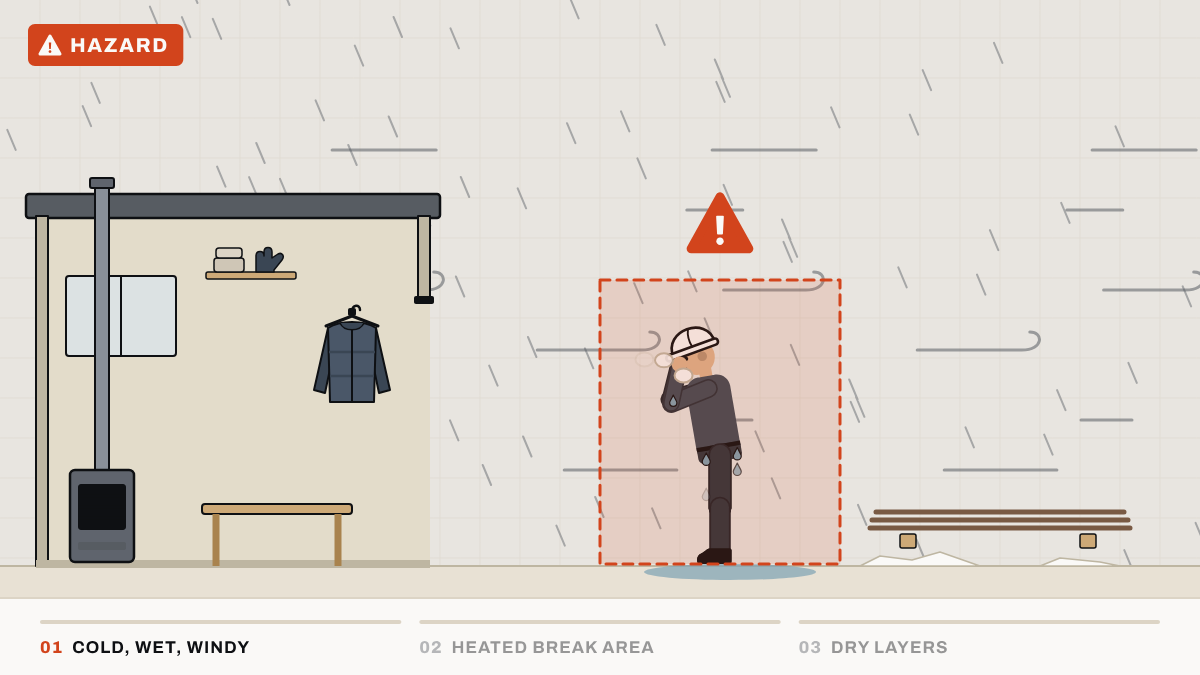
Where it shows up
- Steel erection and roofing in wind
- Concrete work in winter with wet clothing
- Standing in water or wet trenches
Controls, most effective first
Work down the list. Rely on PPE only for the risk the controls above it cannot remove.
| Level | Control |
|---|---|
| Engineering | Heated break areas |
| Windbreaks and enclosures | |
| Vent fuel-fired heaters and keep them away from combustibles | |
| Administrative | Schedule outdoor work for the warmest part of the day |
| More frequent warm-up breaks as temperature and wind chill drop | |
| Buddy system to watch for signs of hypothermia and frostbite | |
| Dry socks and gloves available | |
| PPE | Insulated layers |
| Waterproof boots and gloves | |
| Hard hat liner |
PPE to list on the JHA
Insulated layersSafety-toe boots
OSHA standards
| Citation | Title |
|---|---|
| 29 CFR 1926.154 | Temporary heating devices |
| OSHA | Cold stress (OSHA safety and health topic) |
Federal OSHA construction standards. State plans can be stricter, and owners or contracts can add requirements. This page is general information. Check the full standard for your work.