Health
Hazardous atmospheres
Air that is low in oxygen, flammable, or toxic. Common sources on site are hydrogen sulfide in sewers, carbon monoxide from engines in enclosed areas, and nitrogen or other gases that displace oxygen without any warning smell.
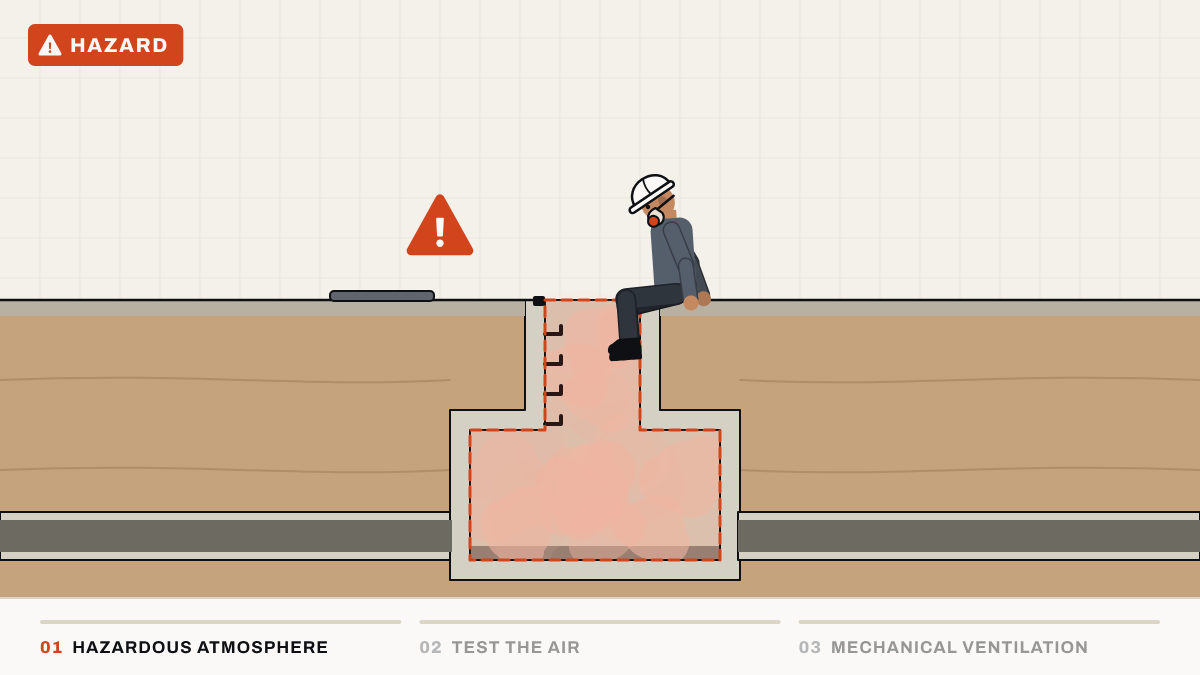
Where it shows up
- Sewers, lift stations, and manholes
- Gas-powered saws, generators, or heaters inside a building
- Nitrogen purging of piping
- Excavations near landfills or fuel tanks
Controls, most effective first
Work down the list. Rely on PPE only for the risk the controls above it cannot remove.
| Level | Control |
|---|---|
| Eliminate or substitute | Keep gasoline and diesel engines outside enclosed areas |
| Engineering | Mechanical ventilation that brings in fresh air |
| Continuous gas monitoring where the atmosphere can change | |
| Administrative | Test the air with a calibrated multi-gas meter before entry and during work |
| Treat the space as a permit-required confined space when it meets that definition | |
| Rescue plan and equipment ready before entry | |
| PPE | Respirator selected for the specific contaminant, or supplied air |
PPE to list on the JHA
Respirator1926.103
OSHA standards
| Citation | Title |
|---|---|
| 29 CFR 1926.55 | Gases, vapors, fumes, dusts, and mists |
| 29 CFR 1926.651(g) | Hazardous atmospheres (excavations) |
| 29 CFR 1926.1203 | General requirements (confined spaces) |
Federal OSHA construction standards. State plans can be stricter, and owners or contracts can add requirements. This page is general information. Check the full standard for your work.