Health
Confined spaces
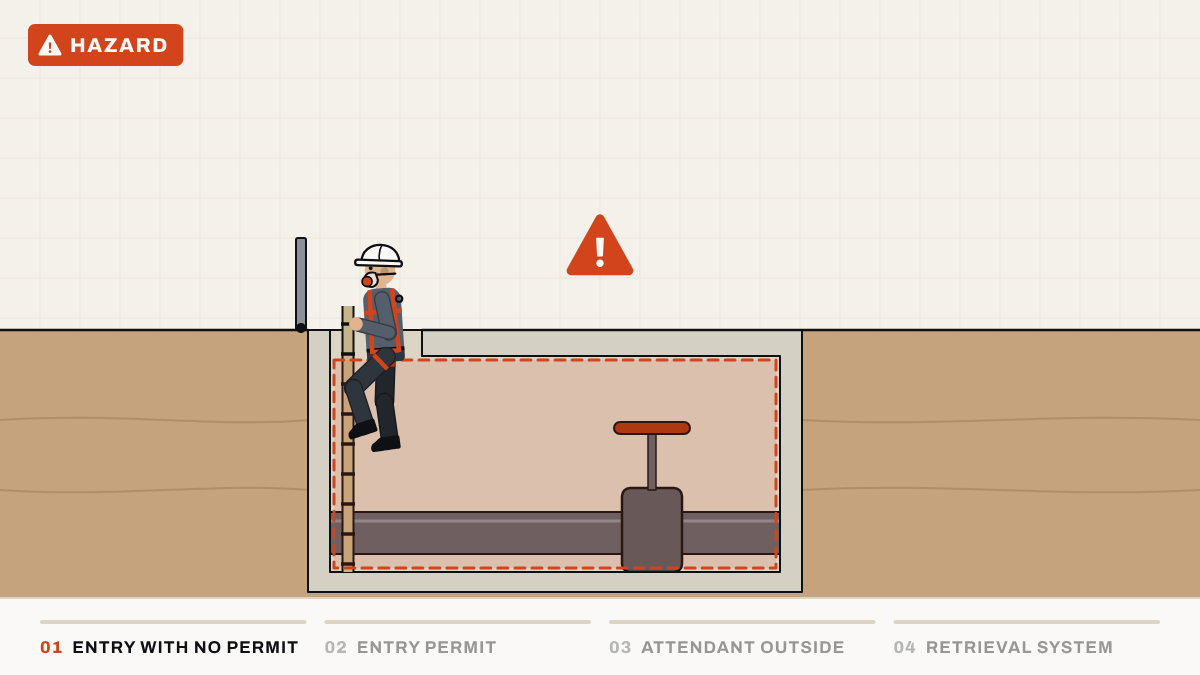
Spaces large enough to enter, with limited ways in or out, that are not designed for continuous occupancy. Subpart AA requires a competent person to identify them, and a written permit space program before workers enter a permit-required space.
Where it shows up
- Manholes, vaults, and pits
- Tanks and boilers
- Crawl spaces and attics
- Pipe and duct chases
Controls, most effective first
Work down the list. Rely on PPE only for the risk the controls above it cannot remove.
| Level | Control |
|---|---|
| Engineering | Ventilation before and during entry |
| Retrieval system for vertical entries | |
| Administrative | Competent person evaluates spaces before work starts |
| Entry permit with tested air readings | |
| Attendant outside the space for the whole entry | |
| Rescue service arranged and able to respond before anyone enters | |
| Coordinate with other employers whose work can affect the space | |
| PPE | Harness for retrieval |
| Respirator if testing requires it |
PPE to list on the JHA
Full-body harness and lanyard1926.502(d)Respirator1926.103Hard hat1926.100
OSHA standards
| Citation | Title |
|---|---|
| 29 CFR 1926.1203 | General requirements (confined spaces) |
| 29 CFR 1926.1204 | Permit-required confined space program |
| 29 CFR 1926.1211 | Rescue and emergency services |
Federal OSHA construction standards. State plans can be stricter, and owners or contracts can add requirements. This page is general information. Check the full standard for your work.