Caught-in or betweenOSHA Focus Four
Excavation and trenching
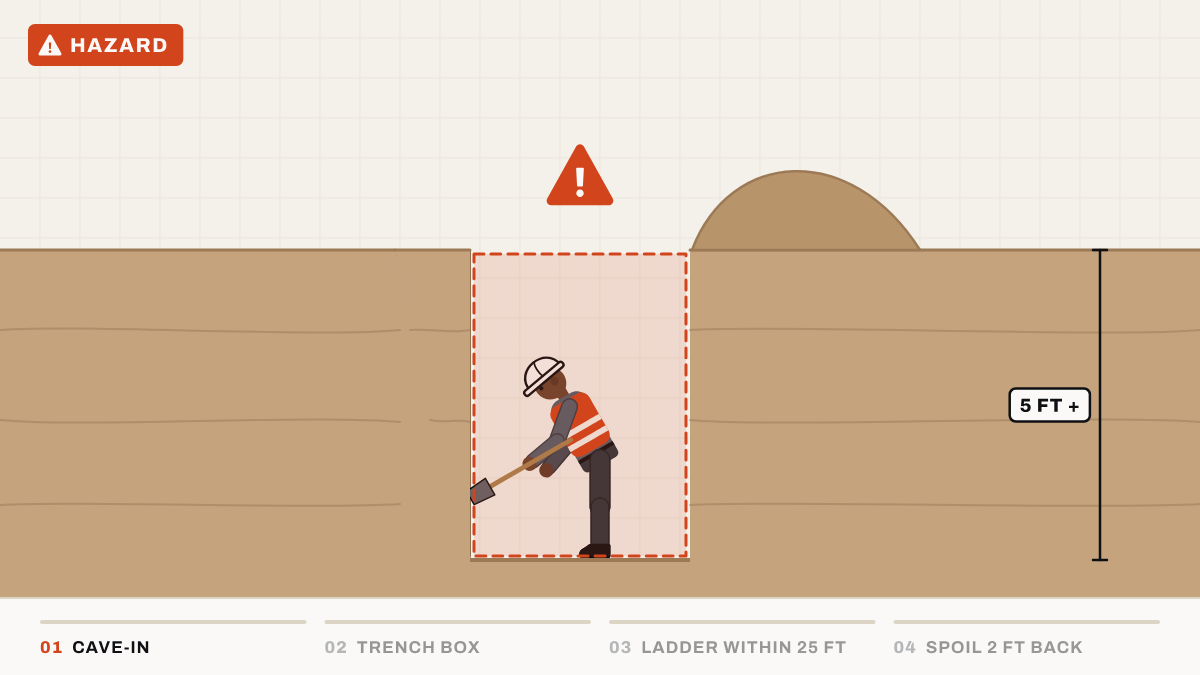
Cave-ins, falls into the excavation, falling loads, hazardous atmospheres, and water accumulation. Subpart P requires a protective system in excavations 5 feet or deeper unless the excavation is entirely in stable rock.
Where it shows up
- Utility trenches for water, sewer, and storm lines
- Footing and foundation excavations
- Potholing near existing utilities
Controls, most effective first
Work down the list. Rely on PPE only for the risk the controls above it cannot remove.
| Level | Control |
|---|---|
| Engineering | Sloping, benching, shoring, or a trench box at 5 feet or deeper, and in shallower cuts unless a competent person finds no sign of a potential cave-in |
| For excavations 20 feet or deeper, a protective system designed by a registered professional engineer, or based on tabulated data approved by one | |
| Ladder, ramp, or stairway within 25 feet of lateral travel in trenches 4 feet or deeper | |
| Keep spoil and equipment at least 2 feet back from the edge | |
| Administrative | Locate and mark utilities before digging |
| Competent person inspects the excavation daily, before work and after rain or other changes | |
| Test the air where oxygen deficiency or a hazardous atmosphere could exist in excavations deeper than 4 feet | |
| Stop work and get out if water is accumulating | |
| PPE | High-visibility vest near equipment and traffic |
PPE to list on the JHA
Hard hat1926.100High-visibility vest1926.201Safety-toe boots
OSHA standards
| Citation | Title |
|---|---|
| 29 CFR 1926.650 | Scope, application, and definitions (excavations) |
| 29 CFR 1926.651 | Specific excavation requirements |
| 29 CFR 1926.652 | Requirements for protective systems |
| 29 CFR 1926 Subpart P, Appendix B | Sloping and benching |
Federal OSHA construction standards. State plans can be stricter, and owners or contracts can add requirements. This page is general information. Check the full standard for your work.