ElectricalOSHA Focus Four
Electrical shock and electrocution
Contact with energized parts, damaged cords and tools, and ground faults on temporary power. Electrocution is one of OSHA's Focus Four. Subpart K requires GFCIs or an assured equipment grounding conductor program for temporary receptacles.
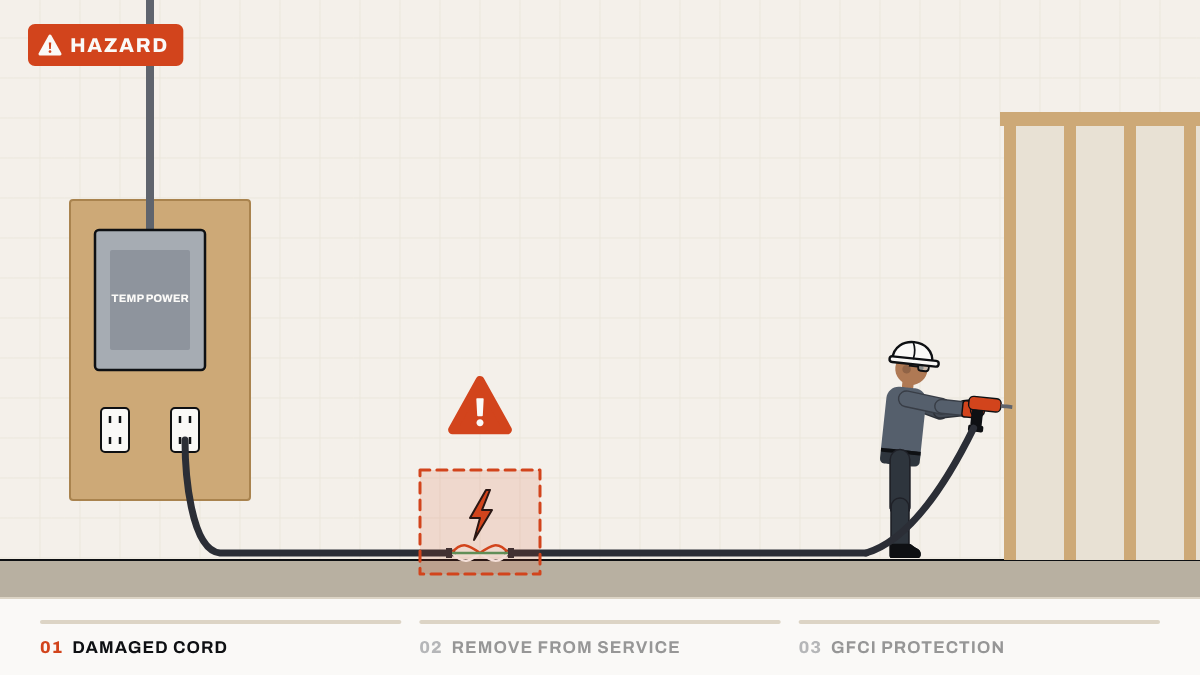
Where it shows up
- Temporary power, spider boxes, and extension cords
- Work in or near live panels
- Damaged power tools
- Cutting or drilling into walls with hidden conductors
Controls, most effective first
Work down the list. Rely on PPE only for the risk the controls above it cannot remove.
| Level | Control |
|---|---|
| Eliminate or substitute | De-energize and lock out circuits before work |
| Engineering | GFCI protection on temporary receptacles, or an assured equipment grounding conductor program |
| Double-insulated or grounded tools | |
| Keep cords out of water and protect them from traffic | |
| Administrative | Inspect cords and tools before use, and remove worn or frayed cords |
| Only qualified persons work on or near exposed energized parts | |
| Scan walls and slabs before cutting or drilling | |
| PPE | Voltage-rated gloves and arc-rated clothing for qualified persons doing energized work |
PPE to list on the JHA
Voltage-rated glovesSafety glasses with side protection1926.102Safety-toe boots
OSHA standards
| Citation | Title |
|---|---|
| 29 CFR 1926.404 | Wiring design and protection |
| 29 CFR 1926.405 | Wiring methods, components, and equipment |
| 29 CFR 1926.416 | General requirements (safety-related work practices) |
| 29 CFR 1926.417 | Lockout and tagging of circuits |
Federal OSHA construction standards. State plans can be stricter, and owners or contracts can add requirements. This page is general information. Check the full standard for your work.