ElectricalOSHA Focus Four
Overhead power lines
Cranes, booms, dump beds, ladders, and long materials that contact or arc to overhead lines. OSHA's crane standard uses a 20-foot minimum clearance for lines up to 350 kV under one of its compliance options in 1926.1408.
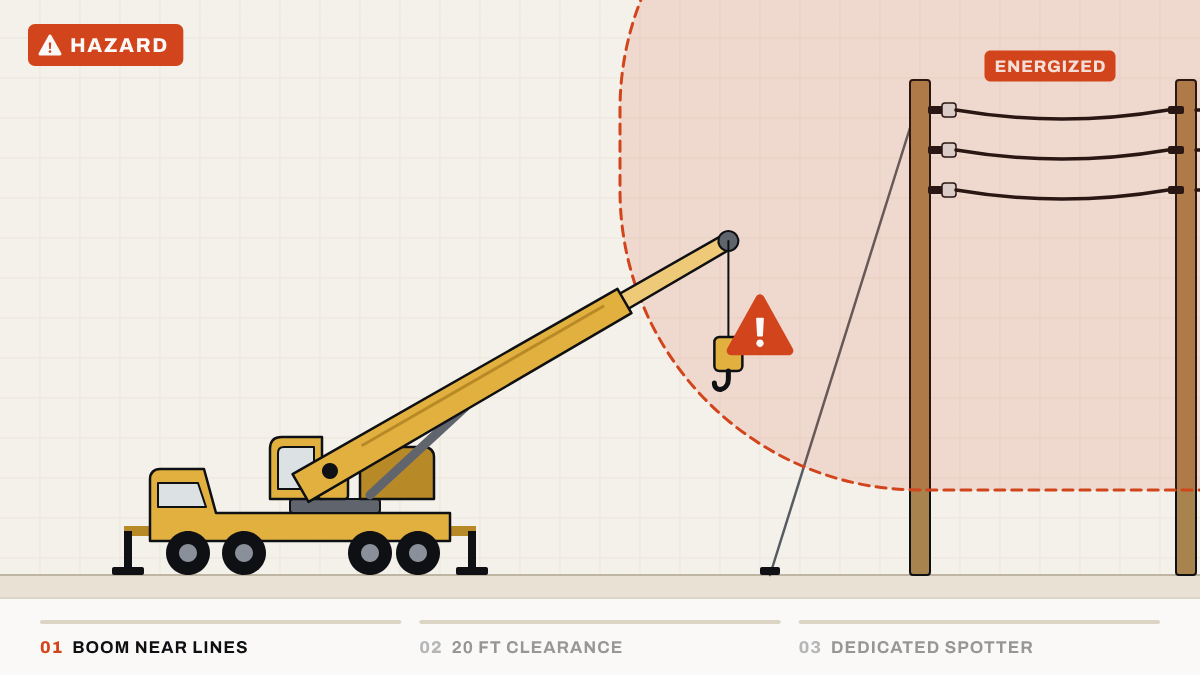
Where it shows up
- Cranes and concrete pump booms near lines
- Dump trucks raising beds under lines
- Aluminum ladders and scaffold near service drops
- Carrying long pipe or conduit near lines
Controls, most effective first
Work down the list. Rely on PPE only for the risk the controls above it cannot remove.
| Level | Control |
|---|---|
| Eliminate or substitute | Ask the utility to de-energize and ground the line, or relocate it |
| Engineering | Insulating covers installed by the utility |
| Range limiters, proximity alarms, or a dedicated spotter on equipment | |
| Non-conductive ladders | |
| Administrative | Survey and mark lines before equipment arrives |
| Plan setup locations to keep the required clearance | |
| Treat every line as energized until the utility confirms otherwise |
PPE to list on the JHA
Hard hat1926.100Safety-toe boots
OSHA standards
| Citation | Title |
|---|---|
| 29 CFR 1926.1408 | Power line safety (up to 350 kV), equipment operations |
| 29 CFR 1926.416 | General requirements (safety-related work practices) |
| 29 CFR 1926.451 | General requirements (scaffolds) |
Federal OSHA construction standards. State plans can be stricter, and owners or contracts can add requirements. This page is general information. Check the full standard for your work.