Health
Lead
Lead dust and fume from disturbing painted surfaces, torch cutting painted steel, and demolition. 29 CFR 1926.62 sets a permissible exposure limit of 50 micrograms per cubic meter as an 8-hour average and an action level of 30.
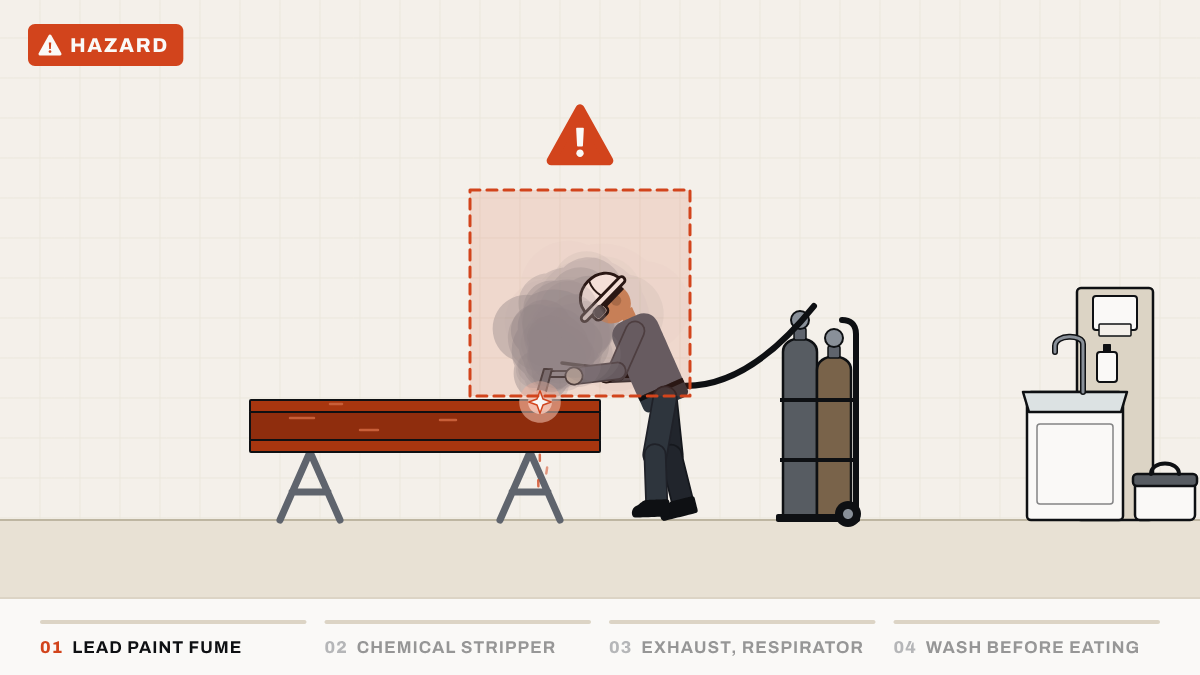
Where it shows up
- Torch cutting or welding painted steel
- Sanding, scraping, or blasting old paint
- Demolition and renovation in older buildings and bridges
Controls, most effective first
Work down the list. Rely on PPE only for the risk the controls above it cannot remove.
| Level | Control |
|---|---|
| Engineering | Shrouded tools with HEPA vacuum attachments |
| Wet methods and local exhaust ventilation | |
| Chemical strippers in place of torch cutting where possible | |
| Administrative | Initial exposure assessment before work |
| Wash hands and face before eating, drinking, or smoking | |
| No food or drink in the work area | |
| Change areas so dust does not go home on clothing | |
| Blood lead monitoring when the standard requires it | |
| PPE | Respirator and protective clothing based on the exposure assessment |
PPE to list on the JHA
Respirator1926.103Work gloves
OSHA standards
| Citation | Title |
|---|---|
| 29 CFR 1926.62 | Lead |
Federal OSHA construction standards. State plans can be stricter, and owners or contracts can add requirements. This page is general information. Check the full standard for your work.