Struck-by
Line of fire
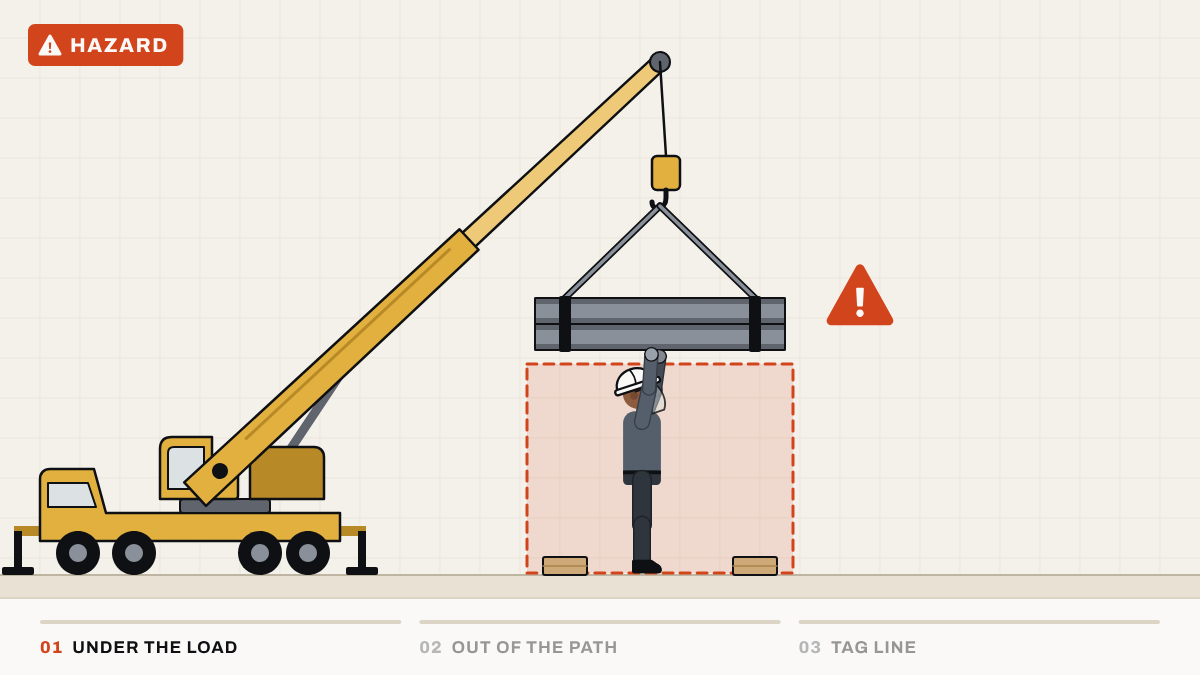
Being in the path of something that can move, release, or fall: a suspended load, a tensioned strap, a pressurized hose, or equipment that can shift. The control is usually where you stand.
Where it shows up
- Standing under a suspended load
- Cutting banding on stacked material
- Disconnecting pressurized air or hydraulic lines
- Standing between a truck and a fixed object
- Pulling or pushing toward your body
Controls, most effective first
Work down the list. Rely on PPE only for the risk the controls above it cannot remove.
| Level | Control |
|---|---|
| Engineering | Whip checks or safety devices on air hoses |
| Tag lines so nobody guides a load by hand under it | |
| Barricades around tensioning and pressure testing | |
| Administrative | Never work under a suspended load |
| Bleed pressure before you disconnect a line | |
| Before each step, name what could move and where it would go | |
| Position your body out of the path, and keep an escape route | |
| PPE | Face shield for pressure work and banding |
PPE to list on the JHA
Hard hat1926.100Safety glasses with side protection1926.102Face shield1926.102Cut-resistant gloves
OSHA standards
| Citation | Title |
|---|---|
| 29 CFR 1926.1425 | Keeping clear of the load |
| 29 CFR 1926.302(b) | Pneumatic power tools |
Federal OSHA construction standards. State plans can be stricter, and owners or contracts can add requirements. This page is general information. Check the full standard for your work.