Health
Respirable crystalline silica
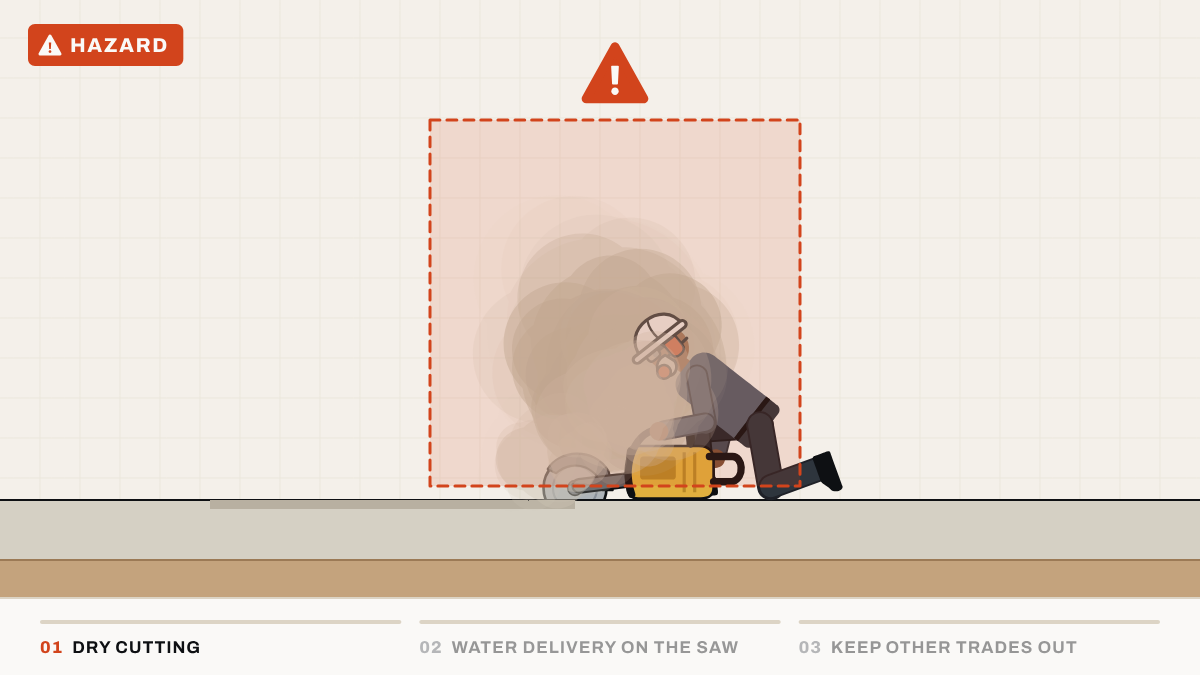
Fine dust from cutting, grinding, drilling, or crushing concrete, masonry, stone, and tile. 29 CFR 1926.1153 sets a permissible exposure limit of 50 micrograms per cubic meter as an 8-hour average and an action level of 25.
Where it shows up
- Cutting block, brick, pavers, or concrete with a saw
- Grinding concrete
- Core drilling and jackhammering
- Dry sweeping concrete dust
Controls, most effective first
Work down the list. Rely on PPE only for the risk the controls above it cannot remove.
| Level | Control |
|---|---|
| Eliminate or substitute | Order material cut to size, or form openings instead of cutting them |
| Engineering | Water delivery or a vacuum dust collector on the tool, as listed in Table 1 |
| Enclosed cabs with filtered air for equipment operators | |
| Administrative | Follow Table 1 for the task, or assess exposure |
| Written exposure control plan and a competent person to implement it | |
| No dry sweeping when wet sweeping or HEPA vacuuming is feasible, and no compressed air for cleaning unless a ventilation system captures the dust cloud or no other method is feasible | |
| Keep other trades out of the dust | |
| PPE | Respirator when Table 1 or the exposure assessment requires it |
PPE to list on the JHA
Respirator1926.103Safety glasses with side protection1926.102Hearing protection1926.101
OSHA standards
| Citation | Title |
|---|---|
| 29 CFR 1926.1153 | Respirable crystalline silica |
Federal OSHA construction standards. State plans can be stricter, and owners or contracts can add requirements. This page is general information. Check the full standard for your work.