Struck-byOSHA Focus Four
Falling and overhead objects
Tools, materials, and debris that fall from above and strike workers below. 1926.501(c) requires hard hats plus toeboards, screens, guardrails, a canopy, or a barricaded area when workers are exposed to falling objects.
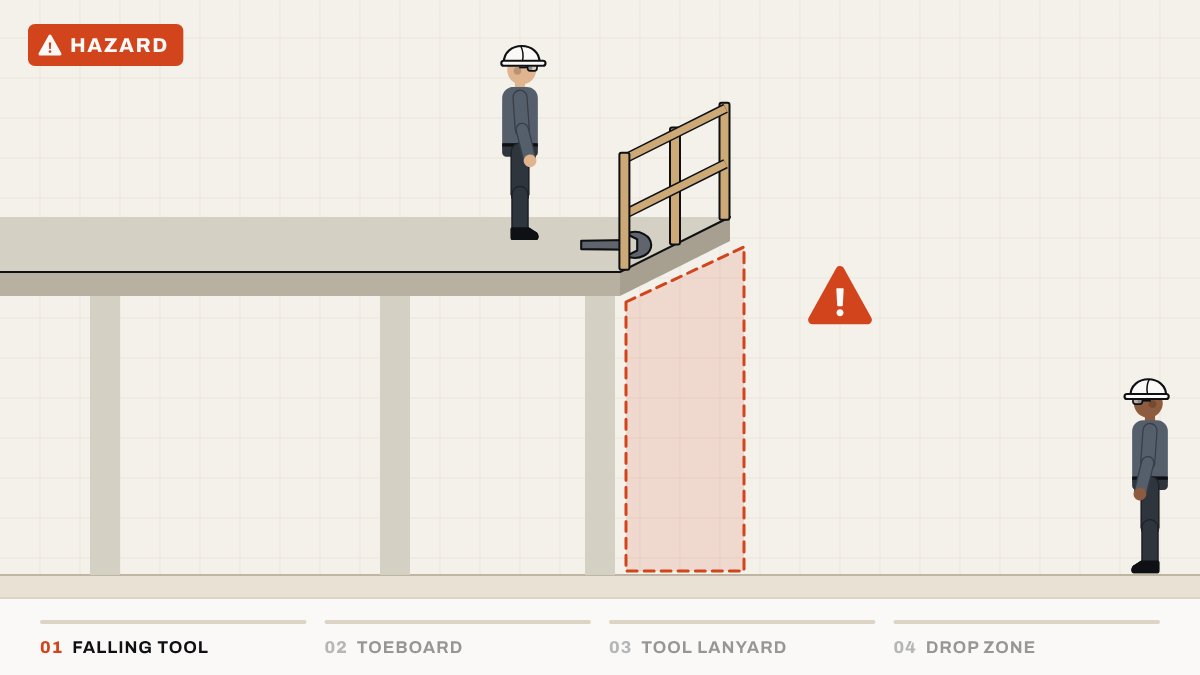
Where it shows up
- Work above an occupied level
- Material stacked near slab edges
- Tools dropped from lifts and scaffolds
- Demolition and debris chutes
Controls, most effective first
Work down the list. Rely on PPE only for the risk the controls above it cannot remove.
| Level | Control |
|---|---|
| Eliminate or substitute | Schedule work so crews are not working directly above one another |
| Engineering | Toeboards, screens, or debris netting along edges |
| Tool lanyards and tethered buckets at height | |
| Canopies over entrances and walkways | |
| Administrative | Barricade and sign the drop zone below overhead work |
| Keep materials away from edges, or secure them | |
| Coordinate overhead work at the daily huddle | |
| PPE | Hard hat for everyone in the area |
PPE to list on the JHA
Hard hat1926.100Safety glasses with side protection1926.102
OSHA standards
| Citation | Title |
|---|---|
| 29 CFR 1926.501(c) | Protection from falling objects |
| 29 CFR 1926.502(j) | Protection from falling objects (criteria) |
| 29 CFR 1926.100 | Head protection |
Federal OSHA construction standards. State plans can be stricter, and owners or contracts can add requirements. This page is general information. Check the full standard for your work.